As a homeowner, you want your investments to add value to your home, simplify your daily routine, and make your living space more enjoyable. When investing in an audio/video (A/V) or Smart Home system, the goal should be to create a solution that complements your lifestyle. The right system is one that revolves around you, your home, and the way you use your space every day.
That doesn’t necessarily mean investing in an elaborate, fully automated home. Sometimes, a few strategically placed smart speakers and convenient keypads are all it takes to make your home feel more connected.
Naturally, one of the first questions homeowners ask is: “How much is this going to cost me?”
The answer depends on the size of your project, the equipment you choose, and the level of customization you’re looking for. Whether you’re considering a simple entertainment upgrade or a fully integrated home automation system, here’s what you need to know to establish a realistic budget and understand the costs involved in designing and installing your ideal A/V system.
Labor Costs
According to the Home Technology Association (HTA), “technology budgets for major remodels and new home construction typically range from 4–8% of the home’s value. This figure excludes lighting control, motorized shades, and home theater systems. For dedicated home theaters, budgets can range anywhere from $10,000 to $1 million or more, depending on the desired level of performance and customization.”
Professional installation is another important factor to consider. Custom A/V integrators typically charge between $100 and $200+ per hour, per technician, depending on the type and complexity of the work. Specialized services, such as programming and configuring advanced Smart Home systems like Control4, may carry additional costs.
For example, a standard TV and soundbar installation on drywall, with convenient access to power, may take approximately one hour. However, installing a surround sound system or mounting a TV on a challenging surface like stone or tile can require 4 to 5 hours or more. A complete media room with multiple components, centralized control, and custom programming may take several days to complete.
At Bond’s Television, our hourly rate is $150 per technician. Our minimum service fees start at $199.95 for one technician and $299.95 for two technicians. These minimum fees include the first half hour of labor and the trip charge. However, the final costs will depend on site conditions, equipment selection, and project scope.
We also offer complimentary consultations, giving our project manager the opportunity to evaluate your space, understand your goals, and recommend a solution that fits your needs and budget. This allows us to provide a much more accurate estimate before work begins.
As a Custom Integrator, it is our job to be your guide and help you navigate the complexities and nuances of technology systems. We want to ensure just as much as you do that you invest your money on a system you can use with confidence. This investment comes with the reassurance that there will be an expert available to help maintain the system and resolve any issues that may arise. Most professional A/V companies offer an installation warranty in addition to the manufacturer’s warranty on the equipment. At Bond’s, we provide a 90-day installation warranty on our installed equipment and follow the manufacturer’s warranty guidelines, which are typically one year. Certain manufacturers, such as Integra, offer extended warranties of three to five years on select products.
The Importance of Infrastructure
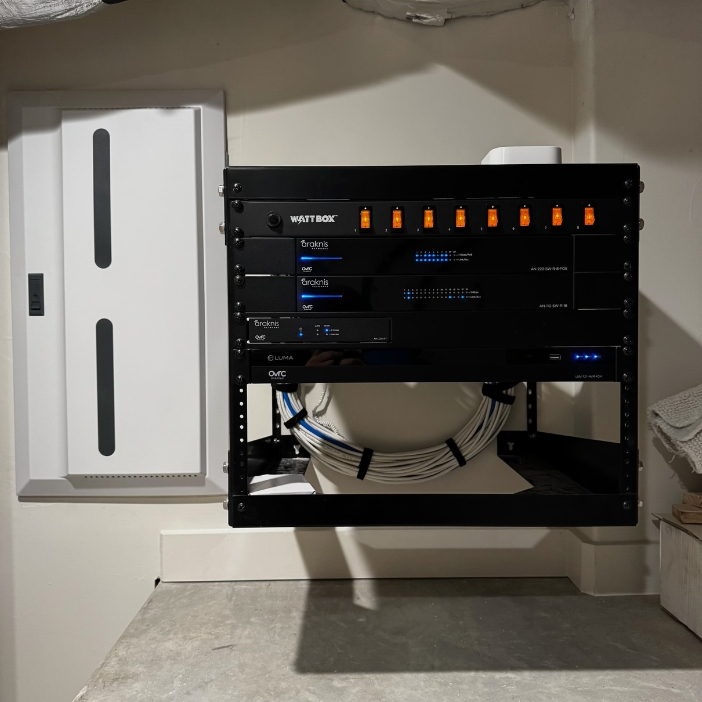
One of the most commonly overlooked expenses when budgeting for an A/V or Smart Home system is the infrastructure required to support it. Cables, wiring, equipment enclosures, surge protection, ventilation, and networking components may not be the most exciting parts of a project, but they are essential to making sure everything functions properly.
A well-designed system needs more than just quality equipment. It needs the right environment and infrastructure to support that equipment over time.
For example, A/V components generate heat and require adequate ventilation. Placing too much equipment inside a confined cabinet without proper airflow can cause overheating and shorten the lifespan of your electronics. Depending on the setup, dedicated equipment racks, ventilated enclosures, and cooling fans may be necessary to keep everything operating safely and efficiently.
Surge protection is another investment worth making. Power fluctuations and electrical surges can damage expensive televisions, receivers, networking equipment, and other electronics. Proper surge protection helps safeguard your investment and reduce the likelihood of costly equipment replacements.
Your home’s network is equally important. Nearly every modern A/V and Smart Home system relies on a dependable Wi-Fi and networking infrastructure. From streaming services and smart speakers to security cameras, lighting control, and automated shades, these devices all depend on reliable connectivity.
Cutting corners on networking equipment can lead to slow Wi-Fi, dropped connections, unreliable automation, and frustrating performance issues. What may initially seem like a way to save money can ultimately result in additional service calls and expenses.
Investing in the right infrastructure from the beginning helps ensure your system operates reliably, accommodates future upgrades, and performs the way it was designed to.
Timing: When Should You Install Your System?
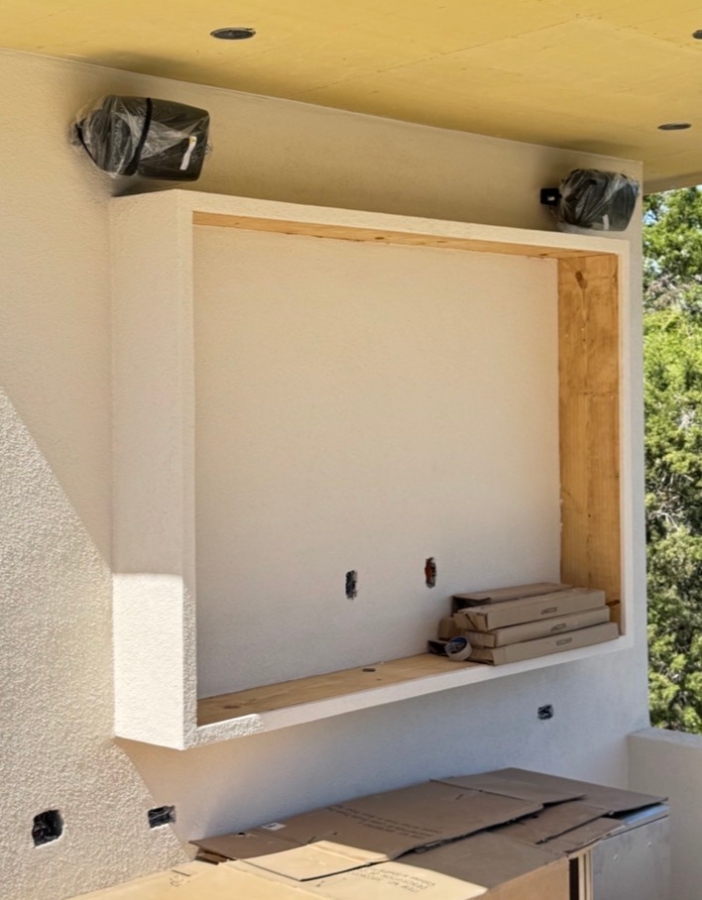
If you’re building a new home or planning a major renovation, timing can make a significant difference in the overall cost of your technology installation.
The construction phase is the ideal time to plan for speaker wiring, Ethernet connections, HDMI cabling, surveillance cameras, equipment locations, and electrical outlets. Running the necessary wiring before drywall is installed is considerably easier and less expensive than trying to retrofit everything into a finished home.
Once the walls are closed, accessing certain areas may require cutting into drywall, navigating insulation, or working around existing plumbing and electrical systems. Planning ahead helps avoid unnecessary labor and additional construction expenses. In order to align with design and aesthetic requirements, a project plan needs to anticipate speaker locations and account for an accessible space to conceal equipment and wiring. Installing an A/V rack after the fact is going to be much more difficult than if the plan already included a designated space for it.
It’s also important to understand that you don’t necessarily have to install everything at once. Breaking your project into phases can make the process more manageable, both financially and logistically.
For new construction and remodels, a phased installation also allows your A/V integrator to coordinate with your builder, architect, interior designer, and other contractors. Certain infrastructure and wiring need to be completed early in construction, while equipment installation, programming, and final system calibration can take place closer to completion.
Taking the time to plan each stage properly helps protect your investment and ensures your technology integrates seamlessly into your home.
Smart Features & System Control
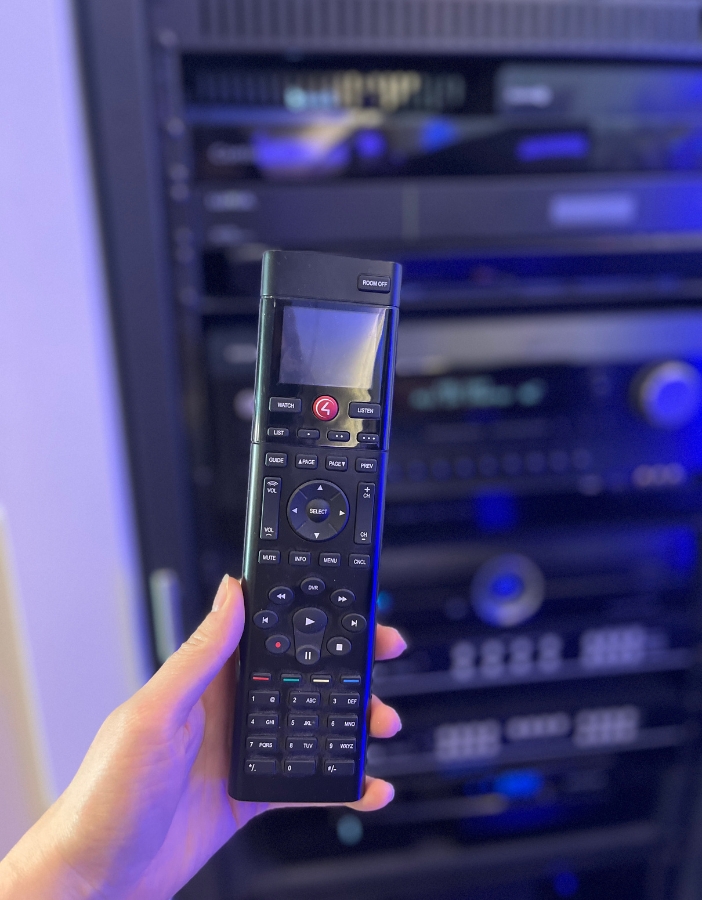
One of the biggest factors influencing the cost of an A/V or Smart Home system is the level of control and automation you want.
Are you simply looking to control your television and surround sound with one remote? Or do you envision a home where lighting, motorized shades, climate, door locks, security, audio, and entertainment systems all work together?
The more devices and features you want integrated, the more equipment, programming, and customization your system will require. A fully automated home can easily represent an investment of tens of thousands of dollars or more, depending on the size of the home and the level of integration.
Lighting control is another area where costs can vary considerably. According to the HTA, “homeowners can generally expect to budget approximately $4–$7 per square foot when controlling most of a home’s interior and exterior lighting. Hardwired lighting control systems typically fall toward the higher end of that range because of their reliability and infrastructure requirements, while wireless solutions can offer a more budget-friendly alternative.”
However, not every homeowner needs a complete automation system. If your primary goal is to enjoy a media room with a television, speakers, Blu-ray player, and a few streaming devices, a universal remote may be all you need. It provides a convenient, customized way to control multiple components without the expense of a larger Smart Home platform.
The key is finding the right balance between the features you want, the convenience you’re looking for, and the budget you’re comfortable investing in.
FAQs for First-Time Home Theater Buyers
A traditional home theater system typically uses an Audio/Video Receiver (AVR) as its central hub. The receiver powers your speakers and connects your entertainment sources, such as a cable box, streaming device, or Blu-ray player, to your television.
For a traditional 5.1 surround sound setup, you’ll need a front left speaker, center speaker, front right speaker, two rear surround speakers, and a subwoofer. Another option is to use a soundbar in place of the front left, center, and right speakers, then add wireless or wired rear speakers and a subwoofer.
If you’re looking to take your audio experience a step further, Dolby Atmos adds another dimension to surround sound. Incorporating in-ceiling speakers allows sound effects to move overhead, creating a more immersive listening experience that brings you closer to the feeling of being in a movie theater.
For a basic home theater setup consisting of a television, AVR, and speakers, you can generally expect to spend approximately $2K–$4K on the products, depending on the equipment you select and the size of your space. Installation costs will be an additional $1K–$2K depending on the setup.
A soundbar system can be a more budget-friendly alternative, but its biggest advantage is often the space it saves. It eliminates the need for multiple speakers and a separate receiver while still providing an enhanced audio experience.
For traditional home theater receivers, we recommend Integra and Onkyo. If you’re looking for a wireless speaker system, Sonos is an excellent option. For more traditional wired speaker installations, some of our favorite brands include Origin Acoustics, Definitive Technology, Episode Speakers, and Atlantic Technology.
Explore some of our recommended in-ceiling speaker options here.
For soundbar recommendations, click here.
This is one of the most common questions we receive, and the answer really depends on your room, viewing preferences, and desired screen size.
For most everyday entertainment spaces, a television is often the more practical option. TVs are generally easier to install, require less specialized room preparation, and offer superior brightness, making them a better choice for rooms with windows or ambient light.
However, if you’re looking for a truly cinematic experience or want a screen larger than 85 inches, a projector and screen may be worth considering. Projectors can provide a much larger viewing area at a more cost-effective price per inch than many large-format televisions.
Keep in mind that projectors perform best in rooms where lighting can be controlled. Large televisions also come with additional considerations, including weight, mounting requirements, and higher equipment costs.
One additional advantage of a projector system is the ability to incorporate a motorized screen that retracts into the ceiling when not in use. This is an excellent option for homeowners who want a large entertainment display without having a permanent screen dominating the room.
Ultimately, the best solution depends on how you plan to use the space and the overall look you’re trying to achieve.
Absolutely! An outdoor entertainment system can transform a patio, pool area, or outdoor kitchen into an extension of your home’s living space.
Outdoor-rated televisions are more expensive than standard indoor models, but they’re specifically engineered to withstand outdoor conditions. Unlike indoor televisions, installing a properly rated outdoor TV in its intended environment will not void the manufacturer’s warranty.
There are also outdoor-rated soundbars designed to complement these televisions, along with weather-resistant speakers that can be strategically placed throughout your patio or pool area to create a more immersive entertainment experience.
One important consideration is the television’s weather-resistance rating, commonly referred to as its IP rating. Not all outdoor TVs are designed for the same conditions. Some models are intended for covered patios with partial sun exposure, while others are engineered to withstand direct sunlight and more demanding outdoor environments.
Before choosing your equipment, make sure the television is rated for the specific location where it will be installed. Selecting the right equipment from the beginning will help protect your investment and ensure you can enjoy your outdoor entertainment system for years to come. Click here for a full guide to purchasing outdoor A/V equipment and a list of recommended products.
If you’re still in the construction phase or haven’t finalized your remodel, now is the ideal time to plan for future technology upgrades. Running additional wiring and installing larger conduit than you currently need will give you the flexibility to expand your system down the road without having to open up finished walls.
Take the time to consider how you may want to use each space in the future. You may not need additional speaker locations, Ethernet connections, or equipment space today, but planning for them now can save you significant time and expense later.
It’s also important to plan for your network’s future needs. Adding extra capacity with a multi-port network switch and strategically placed wireless access points will help ensure your network can support additional devices, improve Wi-Fi coverage, and accommodate future Smart Home upgrades.
The best way to future-proof your home is to plan for the technology you have today while leaving room for everything you may want tomorrow.
Planning Your A/V Investment
Every home and homeowner is different, which is why there isn’t a one-size-fits-all price for an A/V or Smart Home system. The best approach is to start with the features that matter most to you, establish a realistic budget, and work with a professional integrator who can help bring everything together.
At Bond’s Television, we believe technology should enhance your home without complicating your life. Whether you’re looking to upgrade a single entertainment space or design a fully integrated Smart Home, our team can help you plan a system that fits your lifestyle, your home, and your budget.
Contact Bond’s Television to schedule your complimentary consultation and start planning your next A/V project.