You picked a sofa you love, added chairs in a matching fabric and found tables in the same finish. Every piece looks great on its own. Still, the room feels more like a furniture set than a home. The culprit is usually that everything shares the same height, size and texture, so your eye slides across the room without anything to land on.
Designers fix that with layering, and it doesn't take all new furniture. The team at Member Name puts together room setups on the showroom floor every day, and the same few moves show up again and again.
Play With Height on Purpose
Most rooms sit at one level, which makes height the easiest place to start. Sofas, chairs, coffee tables and media consoles tend to land somewhere between knee and waist height, so everything lines up along the same band of wall.
Break that band up with a few height changes:
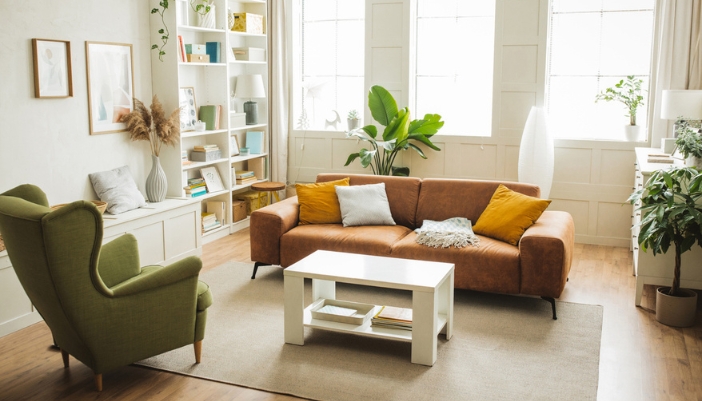
- Tuck a low-slung accent chair beside a sofa with taller arms, so the seating area dips and rises instead of running flat.
- Balance a low media console with a tall bookcase or cabinet nearby to pull your eye up the wall.
- Slide a sofa table behind a low sofa to add a step up between the seat and the wall.
Aim for a mix, not a skyline. One or two taller pieces in a room are usually enough to create rhythm without making it feel top-heavy.

Pair Hard With Soft
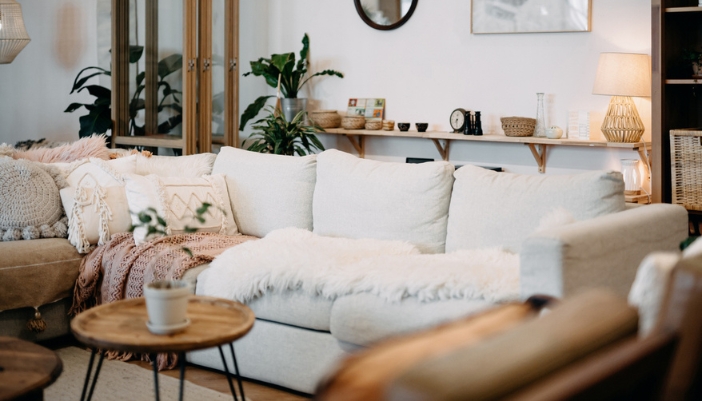
Upholstery and hard surfaces each bring something different to a room. A space full of fabric can feel cozy but shapeless, while one full of wood and metal can feel sharp and a little cold. Put the two side by side, and both start working harder.
- Set a sculptural wood or metal side table next to a plush upholstered chair, and the chair looks even softer by comparison.
- Pair a leather sofa with a textured woven accent chair across from it, so each fabric shows off the other.
- Put a smooth stone or glass-top coffee table in front of a plush, overstuffed sofa to give the seating area a crisp center.
A simple rule of thumb: give every soft piece a hard neighbor. When you look at a seating area, you should see at least one spot you'd want to sink into and one you'd set a mug on.
One Anchor, Then Supporting Players
Scale is the move most people skip, and it often makes the biggest difference.
The problem: A deep sectional, two oversized recliners and a chunky coffee table all compete for attention, and the room starts to feel like a traffic jam.
The fix: Let the sectional lead. Swap the recliners for two lighter, open-frame accent chairs and pick a coffee table that sits a little lower, so the smaller pieces support the big one instead of fighting it.
In a living room, the anchor is usually the sofa or sectional. In a bedroom, it's the bed. Not sure which piece is your anchor? Ask which one you'd build the room around if you had to start over.
Leave Room to Breathe
The space between your furniture matters as much as the furniture itself. Designers call it negative space, which simply means the open areas that let each piece stand on its own.
Pulling your sofa at least 3 to 5 inches off the wall, keeping the coffee table 14 to 18 inches from the sofa and leaving about 30 to 36 inches between large pieces all give your layered pieces room to show off. Without that breathing room, even the best mix of heights and textures starts to feel crowded.
Mix It Like You Mean It
A room that looks pulled together rarely starts from scratch. More often, one well-chosen piece changes how everything around it looks. Stop in with your questions, or get a feel for our accent chairs, sofas, side tables and bookcases in person, and our team at Member Name can help you find the piece your room has been waiting for.